
What If… we all had a better idea of where we are headed?

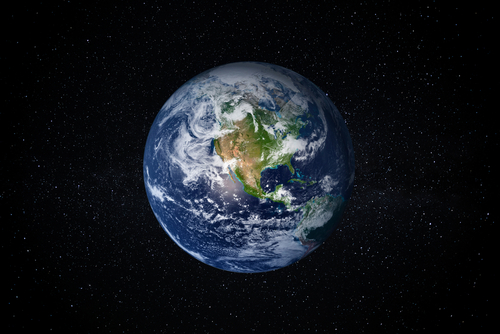
What If… we all had a better idea where we are headed?
A discussion article. Part of The Thinking Upgrade.
Imagine you are sitting in a cinema.
A huge screen stretches out before you. You settle into a comfortable seat. The lights dim. The room falls silent. Music begins to build.
Then, against a black screen, a sentence slowly appears in large white letters:
“We are living and leading on the edge of extinction.”
How do you react? Do you dismiss it? Feel uncomfortable? Think it is exaggerated? Or wonder whether there might be some truth in it?
Those words came from a senior and influential person I interviewed as part of our Thinking Upgrade research. This is a confronting perspective. Whether you agree with it or not - it helps us to put focus on an extremely important question.
Where are we headed – and how much thought are we giving to the direction?
Consider the challenges before us: climate change, war, nuclear weapons, the risks of poorly governed artificial intelligence, cyber-attacks, pandemics, biodiversity loss, economic insecurity, loneliness and political division.
These challenges interact. A conflict can disrupt food and energy supplies. Economic insecurity can deepen social tensions. Distrust can make collective action harder precisely when we need it most.
Alongside these risks sit extraordinary possibilities. Scientific knowledge, human creativity and technology give us powerful ways to learn, connect, prevent suffering and solve problems. People everywhere are improving lives, restoring environments, creating businesses and imagining possibilities others have yet to see.
We have reasons for concern and reasons for hope.
So, are we heading towards our greatest achievements – or creating our greatest mistakes? What would help us recognise the difference early enough to act?
Let us zoom out.
Back to December, 1968. Apollo 8 is orbiting the Moon. Astronaut William Anders points his camera towards the window and captures one of the most influential photos ever taken. Earthrise.
For the first time, humanity saw its home from another world. A small, beautiful blue planet suspended in the darkness of space.
Just one fragile world carrying every person who has ever lived – and everyone who ever will.
When looking at that image, our familiar divisions become harder to see. There are no lines marking countries, organisations, religions or political loyalties. Those distinctions matter enormously in our lives. Yet the photograph invites us to see the larger reality within which they exist.
We have one home: Earth.
Every family, business, government and community depends on that home. On its air, water, soil, living systems and resources. On other people, often far away, whose work and decisions make our daily lives possible.
We are part of an immense, interconnected system containing countless smaller systems: education, healthcare, food, energy, finance, trade, transport, technology, security, government and the ecosystems that sustain life.
We cannot separate ourselves, our organisations or our countries from this wider whole simply because we draw a boundary around them.
A business can improve its figures while passing costs to workers, communities or the environment. A country can secure a short-term advantage while weakening cooperation it will later need. Each part can appear to be doing well while the conditions supporting the whole deteriorate.
The reverse is also possible. An invention can improve lives far beyond its country of origin. A healthier workplace can benefit families and communities. Restoring a river can support wildlife, livelihoods and the people living downstream.
What might change if we asked more often: Does our success strengthen the wider system we depend on? Who benefits, who bears the costs, and what happens over time?
Now imagine an intelligent civilisation observing Earth from afar.
What would it conclude we were trying to achieve together?
Would our choices reveal a clear commitment to a flourishing future? Would our spending, incentives, institutions and everyday behaviour support that conclusion?
Or would our activity look like a race in which everyone is moving energetically, but few have discussed where they are trying to go?
There is so much busyness. Meetings, targets, elections, transactions, deadlines and strategies. We can be intensely focused on completing the next task without asking what the combined effect of all those tasks might be.
A family might hope for greater wellbeing while living at a pace that steadily undermines it. An organisation might promise a sustainable future while rewarding decisions that sacrifice it. A country might speak of long-term prosperity while neglecting the learning, health, infrastructure and trust on which it depends.
If our current choices continued for another ten or twenty years, what future would they be likely to create? Would we choose it?
Having a better idea of where we are headed requires honesty about the direction we are already taking, as well as imagination about where we would prefer to go.
We will never predict everything. Events will surprise us. Good intentions will sometimes produce unintended consequences. We can still explore plausible futures, test our assumptions, listen to different perspectives and notice when the evidence suggests we need to change course.
We can also ask whether we share enough common ground to cooperate.
We do not all need the same ambitions, beliefs or ways of life. Freedom to disagree, experiment and pursue different paths is part of a flourishing society. Any shared direction must leave room for that freedom.
Could we nevertheless agree that children should have a meaningful chance to thrive? That people should be able to live with dignity and security? That future generations should inherit a habitable planet and worthwhile opportunities? That prosperity should strengthen the foundations of life?
There would be difficult conversations about priorities, responsibilities and trade-offs. Those conversations deserve sustained, high-quality thinking. They are part of the work of designing a future together.
And there is so much still to design.
If is believed and, of course, debated that Homo sapiens has existed for around 300,000 years. Against the history of Earth, our story is young. How much longer it continues is uncertain, but we can choose to take seriously the possibility of a future far beyond our own lifetimes – millions of years on Earth and beyond.
Human civilisation remains a work in progress.
Today’s ways of educating, governing, building, generating wealth and caring for one another are open to improvement. Familiarity does not make them the best we can achieve.
Some of the most valuable inventions, institutions and works of art may still be waiting to be imagined. There may be ways to live and work that offer greater freedom, stronger relationships, better health, more meaningful livelihoods and a healthier natural world.
What possibilities are hidden by the assumption that things have to stay broadly as they are?
As you walk through your community, spend time at work or think about your family’s future, ask: Why are things this way? Whose needs are being met? Whose are being overlooked? How could things be better? What could we help create?
These questions bring the future within reach of everyday life.
Each of us influences the wider system through what we buy,make, share, support, challenge and accept. Through how we treat people.Through the organisations we help shape, the habits we reinforce and the ideaswe pass on.
Our inactions matter too. A concern left unspoken can allow a poor practice to continue. An opportunity repeatedly postponed may never be explored.
Our power and resources differ enormously, but we all help shape the future. Those leading governments, large organisations and influential technologies, or directing substantial wealth, carry enormous responsibilities because their decisions can affect millions of lives and generations to come. Together, more than eight billion people also have extraordinary collective power – and a shared responsibility to use it thoughtfully. What we choose to support, buy, create, share, challenge or accept – and what we leave unchallenged – helps determine the world we build.
For each of us, a useful starting point is to identify where we have influence and how we could use it more thoughtfully. A conversation at home. A question in a board meeting. A better purchasing decision. A local initiative. A proposal that connects people who could solve a problem together.
Imagine if more families discussed the lives they hoped to build. If organisations made clear how their strategies contributed to the world they depended on. If country leaders explained the long-term future their policies were intended to create, the trade-offs involved and how progress would be judged.
Imagine if we kept those intentions open to scrutiny and revision, learning from what actually happened.
At Maximy, this is why we believe improving the way we think matters so much.
The quality of our attention, questions, assumptions and conversations influences what we notice, what we overlook and what we decide to do. Better thinking can help us understand connections, challenge comfortable beliefs, imagine alternatives and translate our intentions into effective action. It needs to be supported by institutions, incentives and accountability that make wiser choices possible.
The Thinking Upgrade is an invitation to take that work seriously – in our own lives, with others and in the leadership of the organisations and countries shaping our future.
Return, for a moment, to the cinema.
The screen now shows Earth. Somewhere on that small blue planet are your home, the people you love and the places that hold your memories. There are also billions of people you will never meet, each living a life that matters to them as much as yours matters to you.
We are all participating in what happens next.
What if we all had a better idea where we are headed – and took greater care over the future our choices are helping to create?
Thanks for reading.
Best,
Rob
You’ve got one shot at life
Maximy it!
Discover how we can help you and/or your organisation with your leadership journey to enhance your impact today.